There is nothing quite like a cold, crisp slice of watermelon on a hot summer day. However, bringing home a watermelon that turns out pale, watery, or bland is a huge disappointment.
Watermelons stop ripening the moment they are harvested from the vine. Knowing how to evaluate their physical exterior at the grocery store or farm stand is essential to picking a fruit at peak sweetness and sugar saturation.
🍉 Key Exterior Indicators of Peak Sweetness
| Visual Feature | Target Indicator (Ripe & Sweet) | Red Flag (Unripe or Bland) |
| Field Spot (Ground Spot) | Creamy, butter-yellow or deep golden yellow. | White, pale green, or non-existent. |
| Rind Sheen & Color | Matte, dull finish; dark forest green backdrop. | Shiny, glossy skin or pale/grayish green hue. |
| Striping & Marbling | Uniform, dense, high-contrast stripe separation. | Sparse, faint, or broken stripe patterns. |
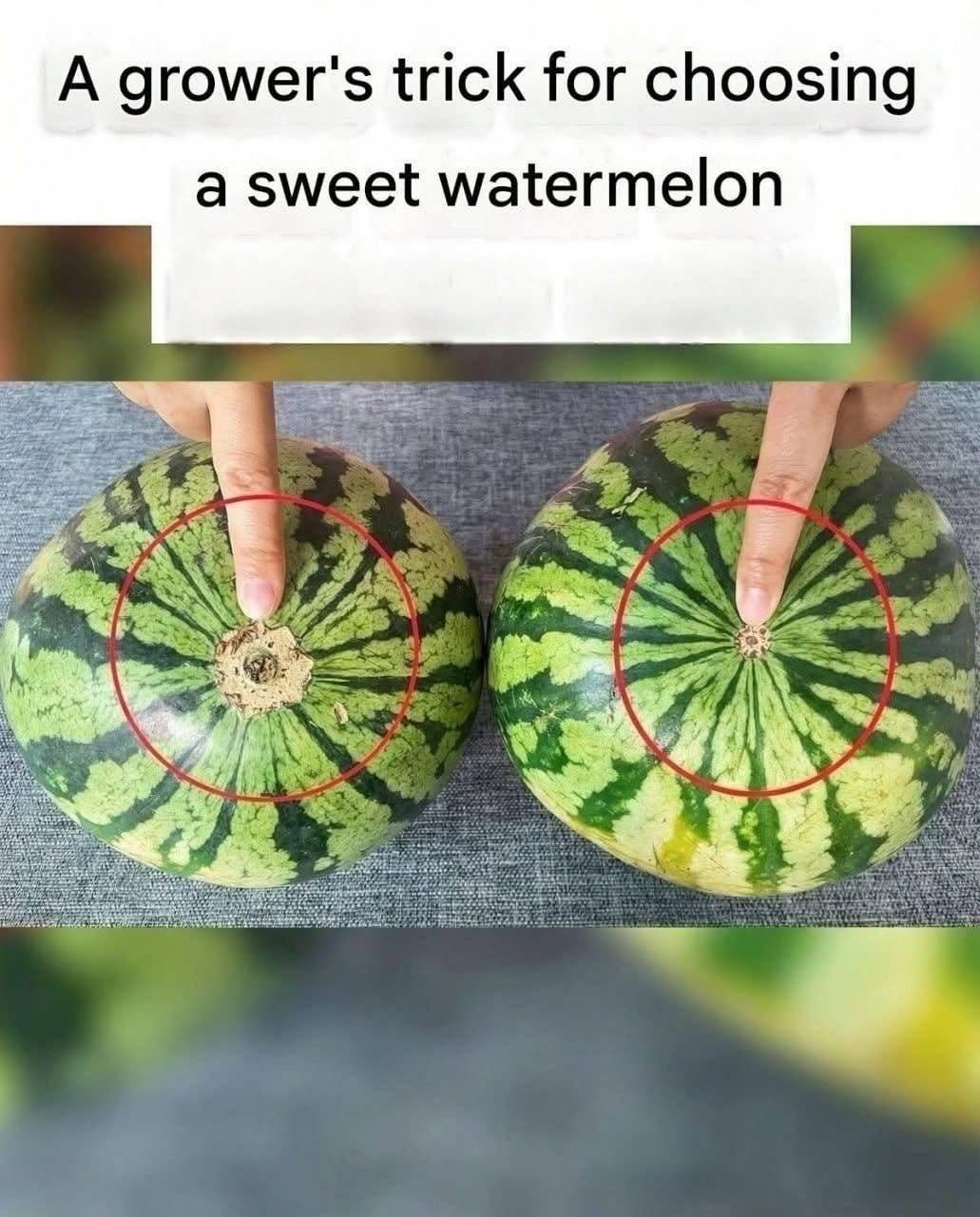
| Stem & Tendril | Dry, brown, and completely withered stem base. | Green, flexible, or fresh-looking stem. |
| Sugar Veins / Webbing | Brown, rough, calloused web-like corking marks. | Completely smooth skin free of brown markings. |
🧪 The Botany & Science of Watermelon Ripening
-
Field Spot Sugar Accumulation: The field spot (or ground spot) is the resting point where the watermelon sits on the dirt while attached to the vine. As the plant translocates sugars (sucrose, fructose, and glucose) into the fruit core, chlorophyll breaks down at the base. A deep, creamy yellow-to-orange spot proves the fruit remained attached to the vine long enough to reach maximum sugar saturation. A white spot indicates it was picked prematurely.
-
Epidermal Gloss vs. Matte Finish: A shiny exterior indicates a waxy, rapidly growing rind—a sign of an immature watermelon. As the fruit reaches full maturity, cell expansion slows down, the outer cuticle hardens, and the skin transitions to a dark, dull, matte finish.
-
Pollination Webbing (Sugar Scars): The brown, rough, web-like scars on the rind are caused by bee pollination during early fruit development. Extensive webbing indicates frequent bee visits, which directly correlates to higher flower fertilization and sweeter fruit development.
Step-by-Step Selection Guide:
LOOK NEXT PAGE DEAR──►
For Complete Cooking STEPS Please Head On Over To Next Page Or Open button (>)
For Complete Cooking STEPS Please Head On Over To Next Page Or Open button (>)